THE Christmas Ornament

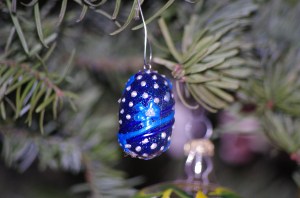
This is one of my all-time favorite ornaments, given to me by my lovely daughter Jessica, who said, when I opened the little package on Christmas morning a few years back: “Dad, it is so YOU!” My blank look cracked her up. It’s the only ornament my grown-up “kids” will let me place on the tree.

moose turd

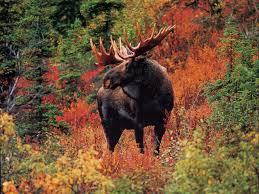
What is it? It’s a carefully lacquered and skillfully decorated, real, honest-to-goodness moose turd. Jess brought it back for me from one of her many trips to Alaska. I am a very lucky man.

I was inspired to post this by the Northwest Frame of Mind (nwframeofmind.com) blog. Visit them and you’ll see why.

moosie


Posted in family, memory, Uncategorized | Tagged , , , , , , | 5 Comments

Ironwood Continues from Yesterday

(Note: This follows yesterday’s opening chapter. I may be absent for a bit. I have writing to do.–jrs)

Homicide detective Tom Hannarty stood in my office with his chin in his hand as the coroner’s people took the body down the steps. I was a little envious at how sharp he looked, considering the weather and the time of day.

“So,” he said through his mahogany fingers, “whoever killed this guy thinks you’re dead.”

“Assuming whoever it was knew me and wanted to kill me.” I said. It was strange speaking of myself in the past tense. “Whoever put the body in my chair certainly thinks I’m dead. That’s probably the place to start.”

Hannarty looked at me. “You think the killer and the people who moved the body don’t know each other?”

“I don’t think anything. But it seems right to not assume that the killer dragged it up here. But somebody involved knew me, or the body would have stayed where it was. You saw the sand in the hair and on the jacket?”

Hannarty nodded. “And in his pockets, his shoes, his socks, and, I’m guessing, his shorts. Given the weather, the condition of the clothing, and the height of the rivers, I’m guessing the body was moved more than once.”

“From where the murder took place to where somebody who knew me found it.”

It’s a working hypothesis,” said Tom.

“And,” I continued, “whoever it was took my father’s .36-caliber Navy Colt from the desk. That has me seriously motivated to find them.”

“They must’ve been pretty sure that you wouldn’t need it anymore.”

“Yes. I will do my best to make them regret taking it.”

“Be careful about that,” Tom said. “I know how you are.”

“I wonder how long I should stay dead.” I felt like rubbing my hands in glee.
Hannarty sighed. “Why do I get so nervous when you sound happy?”

I took that as a rhetorical question and waved to Tom as he left, shaking his head. I looked at my watch. I had two phone calls to make.

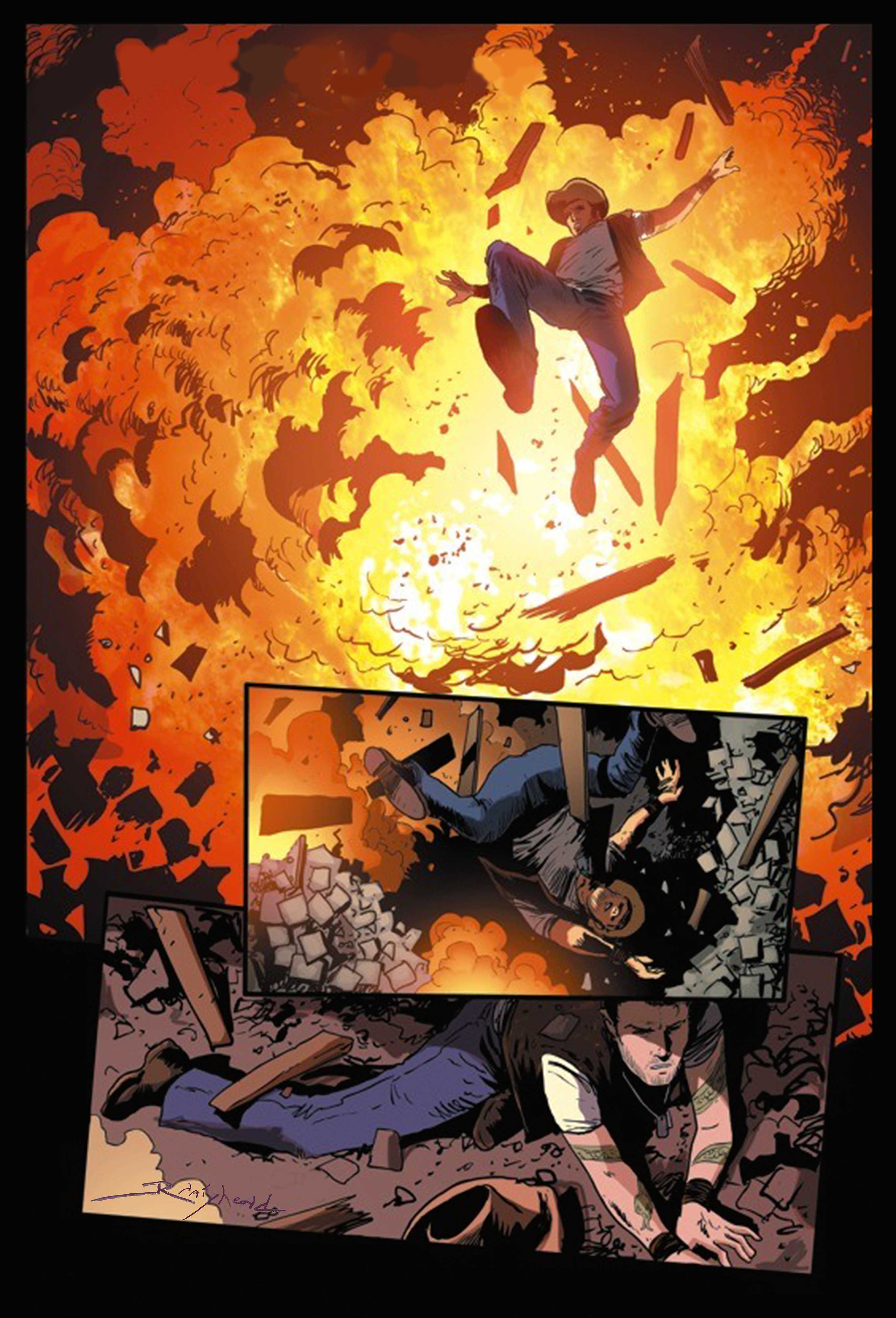
This is wonderful art from Jim Craighead. He drew it after reading an Ironwood scene.

Desert-Mystery_Concept_IRONWOOD_002_JRC

Posted in American history, Detective novel, Excerpt, Novel Excerpt | Tagged , , , , | Leave a comment

Opening for Ironwood #2–Dead Me

(Note: this is one of three openings I’ve written for the “next” Ironwood novel.–jrs)

Bucket’s nose in my ear woke me up. I cracked open an eye. It was still dark. I reached out, ruffled his soft ears, and tapped the top of my clock so the dial would light. It was 5:30. Bucket wanted out. I could hear a respectable rain drumming against the roof and outside deck of my houseboat. I might have groaned.

Still soggy with sleep, I pulled on some Gortex pants and a thin rain jacket. I contemplated coffee, but Bucket’s lean look and high, white-tipped tail spoke of his need. I didn’t argue.

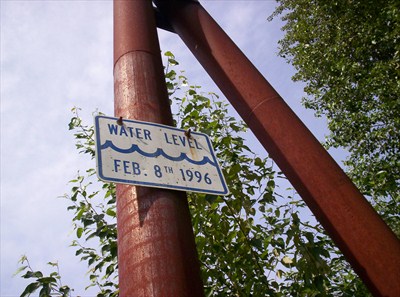
We made it down the gangway. “Down” was the operative word here. On most every day for the last twenty years, leaving the houseboat had been a walk up to the shore. The river level was more ominous than I’d ever seen it.

Bucket bumped his head against my knee and I muttered something about sleep and rain. The truth was, we needed the work. We made it to the grass at the end of the gangway and squished up through Oaks Park to the pavement that marked the Sellwood neighborhood.

We ran. We worked on Bucket’s hand signals. I put him through command sequences. He responded well every time and earned the little tasty rewards I gave him. He was having a fine time. I was waking up and had to admit that life was pretty good.

The streetlights lit the rays of water that inexorably dove into the ground as gravity wrote the script. Bucket and I moved through it like fish through a current. We were closer to dolphins than we were to other mammals. It was a river we ran through, an incessant downpour that only Northwestern people living on the west side of the Cascades can understand. We see it all too often from November to June. It is who we are. I’d grown up on the much drier east side of the mountains, but had embraced the weather like, well, the proverbial duck. If you want to visit, come in the summer. Don’t bother with the winter. We hate whiners.

Bucket and I found an eat-up-the-miles rhythm quickly, as we always did, and ran out 17th towards Waverly Country Club, an old-money Portland golf course with a great history. We cut across the first fairway and ran down to where the river surged up into the property. It was a real flood. As the sky lightened weakly it showed us the chocolate mass of the Willamette River as I’d never seen it before. People had been talking of the Hundred Year Flood and I was starting to believe it.

We ran haphazardly along the irregular track that followed the river until we got back to pavement that we recognized. I was having second thoughts about staying on the river. This was some really serious water. I was confident that the houseboat dock would stay on its pilings, but looking at the stuff coming downriver I was beginning to worry about what might slam into it. Taking a hit from some kind of formidable flotsam was looking almost likely as I studied the debris in the water. As if to prove my point, the bloated body of a brown and white cow tangled up in a whole dogwood tree bobbed past us as we slogged along above the surge.

The main current of the river usually flowed well off my porch, but the sheer volume and velocity of the flood had changed everything. Bucket and I got back to the house where I dried him off, grabbed all of my clothes, my guns, and what little else I owned these days, and put everything in the cab of my mostly-restored 1950 Chevy pickup. There was almost room for Bucket and me too. At the top of the driveway, which was mostly underwater, I looked back at the sprawling structure and hoped it would survive.

We drove across the Sellwood Bridge. My thought was to take a shower at the gym I belonged to, but the river was high enough in the neighborhood to make that a bad idea. Frustrated, I drove over to my office in Multnomah Village. A cat bath in the sink would have to get me though the day.

My office is on the second floor of a row of storefronts. There is a non-descript door next to the Chubtown Café that opens to a stairway. At the top of the stairway and slightly to the left is the door to my office. It reads: “Mike Ironwood – Discreet Investigations and Salvage Consulting.” The salvage consulting bit is from the Travis McGee novels I’d loved when I was younger. I’d read all of them during my two Special Forces tours in Nam and continued with the series until it stopped in 1985, when John D. McDonald died. I still grieve that there are no new ones forthcoming. The whole notion just resonates with me. I could do far worse than having McGee as a hero. Sure, he’s just fiction, but my experience has shown me that many people are mostly fiction, especially to themselves.

At the top of the stairs, Bucket stopped and growled from deep in his broad chest. My .40 caliber Ruger appeared in my hand without any conscious direction. I stood at my office door, listening. I heard nothing. Bucket stopped his growl, looked at me and whined. I think he was trying to tell me that whatever had visited my office was no longer a danger. I pushed on the door. To my surprise it moved inward. The lock had been sprung. I nudged the door so that it swung slowly open. Someone was sitting at my desk. My pistol covered him while I switched on the overhead light.

The man sitting in my chair was me. Sadly, there was a gunshot wound in my right cheek, another in my left eye, and a small blue hole in the center of my forehead. I did not look at all well.
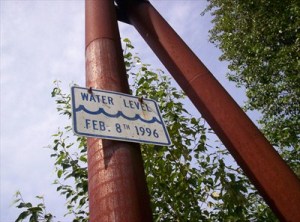

water level 1996

Posted in Detective novel, Excerpt, Novel Excerpt, Oregon | Tagged , , , , , , , | Leave a comment

Excerpt from “Death is Easy”

(Note: This is an excerpt from a Mike Ironwood novel I’ve “finished” and am now rewriting. For the sake of context, Daniel is Mike’s half-brother who is also half Nez Perce. ~jrs)

When we got out of bed Bucket came and sniffed us both with interest and appreciation. Even my human nose could smell us so I figured that his dog nose was in overdrive. Finally, he snorted. Willy and I both laughed. Snorting is also his way of asking to be let out. I obliged him. The street lights were just starting to come on.
I built a fire while Willy made coffee.
“How long have you been a private cop?” she asked.
I considered before answering.
“About twelve years,” I finally said as I watched the flames lick through the kindling. “I was a state bull for a few years. When that just flat didn’t work, I decided to give the private thing a shot. I had some romantic notions about it that were dispelled pretty quickly.”
“Like what?”
“Oh, I don’t know. Like being able to set my own schedule and not having to pay attention to the business side of it. I have always disliked taking orders, especially from people who don’t know how. If I’m going to take an order from a moron, I want it to be me. And I never really understood cash flow until I got into this.”
I paused again. Willy came out of the kitchen with two mugs and put them on the low table in front of the long leather couch. She took the end of the couch closest to the fire and tucked her long legs under her. She was wearing one of my t-shirts that fit her like a nightgown. Every time I looked at her another little bit of me wandered off, mumbling.
“When I started, I swore to myself that I would never be the guy in the tree taking graphic photos of infidelities. I have worked a couple divorces, one at the behest of a lawyer friend and once because the woman involved was trying to leave her husband who had disappeared. I figured out that she’d had him killed and handed everything I’d found to my friend Tom Hannarty on the Portland Police Bureau. I did a lot of that work for free, but it was okay.”
“More windmills?” Willy sipped her coffee and smiled.
“I guess,” I said. “I seem to be inexorably compelled to do what I think is the right thing to do. It may not be right to somebody else, but if it is to me, it goes to the top of my list.”
“Are you telling me that you’re a hopeless idealist?”
I grinned at her. “Reckon so,” I said.
“I can live with that,” she said.
That had a nice ring to it, in a very scary sort of way. I put more wood on the fire.
Willy sat up and regarded me seriously.
“I’m not going to ask you how many people you have killed because that’s really none of anybody’s business and I’m not sure you even know. What I want to know is how you deal with it.”
I looked at her intently and she didn’t look away. She was every inch a ranch girl and sat leaning forward. Her lips, swollen a little from our kissing, were slightly parted. Her hands gripped her knees. Her hair, now only in mild disarray, was smoothed back from her forehead.
There was no glamour in her. She was as straight-ahead a human being as there had been since we came down from the trees. A deep part of me registered a bond there, not as a lover, or a couple, or anything having to do with romance. She was a boon companion, something more, quite likely, but certainly nothing less. She was a rock with connections to the center of the earth.
“It seems glib,” I began, “to call that part of it an occupational hazard, but it’s true nonetheless.”
Here I paused, considering. I turned and looked at the fire.
“I don’t know, Willy, I’m not really sure I deal with it at all. My time in the Special Forces was intense and I’ve tried to let as much of that go as I can. Dreams come sometimes and I don’t react well, but I understand that those memories are a part of me. I can ignore them most of the time. When I can’t ignore them I have Daniel, who has many of the same dreams. But my life since then has been spent as what I call a protector. I take that very seriously. If I had a better relationship with authority I’d probably still be a cop, or maybe even still in the military.”
I nodded to where my beret was hanging on the wall behind the big desk.
“I don’t wear that hat any more, but I’m proud of the service I gave, even if the big picture was horribly misguided and cruel. It’s always the regular people who suffer the most in a war. Soldiers have a job and it keeps them on some kind of a track, however tenuous. The general population doesn’t have squat in a war zone. They’re just in the way and they die, often simply at the whim of fate.”
Satisfied with the fire, I moved to the couch and picked up my coffee. It was dark and good. Willy turned slightly toward me and waited.
I was treading water in an uncharted sea.
“I think,” I went on, “that there is a Warrior class in the human family. And, like the rest of the family, there are Good Guys and Bad Guys. Daniel and I are part of the Good Guys, at least by our own reckoning. We are both very good at violence, at staying calm when others panic. Would the world be a better place without us? I don’t know. I suppose it’s a question worth asking, but for me, it is what it is. I am a warrior and I accept what that means. I am grateful for the awareness of it, just as I am grateful for the breath I draw. I don’t think I can articulate it any better than that. Did I answer your question?”
She sat back sipping her coffee, the t-shirt riding up her thighs a little. Her eyes were not smiling, but they were open. Her face was composed.
“Not in a Freudian way,” here she smiled at herself, “but I’m glad it is a grey area for you. Character counts,” she continued and smiled at me, “and you are one.”
Chuckling ensued.
“I hope,” she said, “that we have this conversation many times. I am interested to see how it turns out.”
I leaned over and kissed her on the ear, then leaned back. “I like you,” I said.
“I know you do. And I am utterly infatuated with you, which is very interesting. My intuition tells me that’s okay, but my brain is very leery. That’s the interesting part, I guess. I’m not going to ask any questions. I’m just going to let whatever happens, happen.”
“Great plan,” I said. “I think I’ll tag along.”
She slid over to my end of the couch and snuggled into the crook of my arm.
“Mind if I stay here tonight?”
“You are such a comedienne.”
“My stuff is still in my truck and I’m not really dressed to go get it.”
“I’m really not either.”
“But you’re a man.”
She moved my sweatshirt.
“See?”
“Would you put clothes on if I went and got your stuff?”
“Maybe.”
“Well then, it can stay right where it is. Shall we move back to the bedroom?”
“What’s wrong with right here?” she said in a thick voice.
“I like the way you think,” I said.
Between the fire and us, the leather on that couch got really warm.

fire2

Posted in Detective novel, Novel Excerpt, Sex, Slice of Death, Slice of Life, story excerpt | Tagged , , , , , , | 1 Comment

Excerpt: The Talons of Quantam (opening of Book II)

A giant hairless man, dressed in exquisitely tanned buckskin, woven through with cunning designs, led him to a vestibule at the north side of the great hall.
“I shall be just outside. When you are cleared, I shall take you to Master Shin,” he said.
His tone was genuinely friendly, but his eyes were lifeless. He had recited this many times for many visitors.
“How long might this take?” asked Riffhawk.
“Are you in a rush?”
Riffhawk laughed. “No. I have the curious gene.”
The man looked down at him and smiled a smile he believed to be inscrutable, but it spoke volumes to the slender, gray-haired Riffhawk, whose eyes showed an age and a depth that could only be guessed at. The folds of his brown travel-stained robe, however, belied a spry center. He carried a rough rod that was no thicker than a spindly branch from an Aldan tree and was the length of the support staffs used by fishermen in the swift mountain rivers. His grip on it was not tight, as if his hand knew it would never be far away.
He looks as if he is made of whipcord, thought the giant, and there is an undeniable peace upon him. He is not the usual traveler, stopped and brought to Master Shin. His eyes look everywhere without being obvious. Yes. This one is different. The audience would be interesting.
As soon as the broad hardwood door shut with a heavy click, a man and a woman entered the small room through a heavy curtain opposite the door. They wore yellow robes and held their arms crossed. They looked remarkably similar, their differences showing in their faces and not in the way the robes hung on their frames. Amusement danced in the eyes of the old man in the brown robe.
The man spoke. “What is your purpose here?”
With his eyes on the woman’s face, Riffhawk let out a quick sigh. “I was passing through the border country in the north when I was detained by a group of priests, who suggested that I detour through the city, here, to report my mission. Sadly, I have no mission to report and would like to be on my way as soon as possible. But,” he continued, “as long as I’m here, it is probably a splendid idea to meet Master Shin and learn what I can about this realm.”
The woman did not meet his gaze.
She is staring at my feet, thought the traveler, just as I would do to see the truth in what I say about where I have been.
His estimation of her grew, but not without a grave caution, as he began to take her intelligence into account. Riffhawk suspected that she would recognize very quickly if he omitted information when she asked him a question.
Suddenly, he had another thought. It made him smile.
“Do we amuse you?” asked the man with an edge in his voice.
“Generally,” Riffhawk said, “the entire world amuses me. But to answer your question, no, I do not find you very amusing.”
“Are you armed?” asked the woman directly.
He felt the sharpness of her eyes. He decided to gamble.
“Yes, Master Shin, I am armed, but I assure you that you have nothing to fear from me. From the rest of the world? I cannot say. But you have nothing to fear from me.”
The man in the yellow robe drew in his breath and was about to speak when the woman interrupted.
“Leave us, Kindor,” she said. “I will continue this conversation myself.”
“But…”
“Leave us!”
There was no room for argument. The man shot an angry look at Riffhawk and left the small room, his arms still folded in front of him, and his neck arched.
Wounded pride is a harbinger of revenge, thought the old man. This Kindor would bear watching.
Master Shin waited until the curtains stopped dancing from Kindor’s swift exit before speaking.
“What should I call you?” she asked.
“My birth name was Cesár Julius,” he said, gambling again, “but I am known to a few as Riffhawk. I try to stay as unknown as I can. In times like these, I have found it best to fly under the radar.”
Her look sharpened. He hadn’t been certain that was possible, but there it was.
“What is radar?”
He stared back at her and kept the smile out of his voice. “It was an ancient defense field, used to detect the position of enemy craft and to follow weather patterns.”
It was her turn to look amused. “How do you know of this radar?”
He regarded her closely. Curiosity cast her features with anticipation and a light shone from her eyes. The bored ritualistic demeanor she’d shown when he’d first seen her had vanished. She looked ten years younger. Her arms had uncrossed and were open, her hands resting lightly at her waist. There was a shape beneath her robe and Riffhawk had to admit it was pleasing. Still, he proceeded carefully.
“I am a traveler, both by nature and profession. I have seen and heard many things from many places. The story of radar comes from the other side of the great ocean. If you like, I will tell you what I know.”
She smiled brightly at him, which seemed far more dangerous than her stony grimness.
“I would like that very much,” she said, “and forgive my lack of manners. You must be exhausted from your travels.”
Master Shin clapped her hands sharply, exactly twice, and the heavy door behind him opened to reveal the giant, who was now carrying a staff of his own.
“Bordor! Tell the kitchen to prepare a light supper for two and show our guest where he can freshen up.”
She looked at Riffhawk. “An hour?”
He nodded and bowed. “An hour.”
“Good,” she nodded. “I am looking forward to learning more about you.”
“And I, you,” he said.
Their eyes met and held for a moment. This game was far from over.
She left him in the company of Bordor, who looked at Riffhawk with open curiosity.
“How did you know?” he asked.
Riffhawk studied the giant. He was well over seven feet tall and well-muscled, but there was an incongruous softness to his smooth face.
“I didn’t know,” he said. “I guessed. She was obviously the brains of the outfit and there was an armed contingent of women, bristling with bows and arrows, at the other end of the hall from the door we came in. In my travels, armed women are rare, especially in a palace. When I saw her intelligence, I just put two and two together. If I’d been a fool, I would now have several arrows in my chest and you’d be dragging me out of here by my heels.” He paused.
“Kindor is her brother?”
The giant nodded. His face soured briefly, but his smile returned quickly.
In the hallway, the women with weapons were nowhere to be seen. Riffhawk bent to pick up his small backpack and noticed that it had been opened. He was not surprised. He was sure Bordor had puzzled at a few of the items he traveled with.
He opened the pack and checked the contents. He reached inside and briefly fondled the short stick that was always with him. He made sure the flap on the pack was loose.
“It is all there,” said Bordor. “I apologize for the rudeness, but it is my given duty to examine everything.”
“I understand. I have nothing to hide,” he smiled at his lie, “and there is no offence taken.”
Seemingly satisfied, the giant led him through several hallways to a large open courtyard. Riffhawk guessed it was the center of the modest palace. They encountered no other people, which seemed odd. But Riffhawk felt eyes. He was certain that they were being watched. He was reassured when the rod he carried vibrated ever so slightly. There were eyes upon him, probably many.
The courtyard was grand. The walls were draped with rich tapestries and the floor was made from smooth stones the like of which he had never before seen. The walls, made from another kind of stone, rose two stories on all sides, but were cunningly shaped to allow maximum sun. A walkway with a low parapet ran around the top of the broad patio they were crossing. It was an open and airy place.
“Where is everybody?” Riffhawk asked.
Bordor’s broad back shrugged. “They are at prayer. When the sun leaves the courtyard, it is time to pray. All of the people go to the cathedral down that way,” he pointed, “and pray for the continued safety of the realm.”
“They don’t pray for their souls and their own well-being?”
Bordor’s massive shoulders shrugged again. “I don’t know.”
“You don’t pray?”
Bordor looked over his shoulder at the much smaller man. “No,” he grinned, “I am exempt.” He paused a moment. “And I offer my gratitude in other ways.”
Riffhawk nodded. He was sure of that.
Bordor showed him up a flight of stairs, down a short hallway, and into a suite of rooms that were simple, but elegantly appointed. There was a sitting room with a desk, a washroom with running water, and a sleeping chamber with a bed large enough for even Bordor. The color scheme ran from rich tans to warm orange and peach. Blue accents pulled the rooms together. Trim at the ceiling and floor was golden.
Riffhawk put his pack on the bed and leaned his staff by the window.
“Make yourself comfortable,” the giant said as he left. “I will be back in less than an hour.”

eagle1

Posted in Excerpt, Speculative Fantasy, story excerpt | Tagged , , , | Leave a comment

Winter Kill

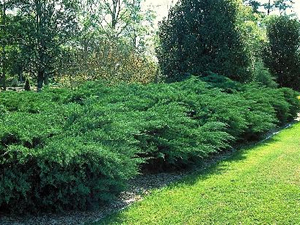
Across the street and old man
ferociously attacks the winter kill
on his low-slung juniper.
He steps back to clear the sweat

and smacks his lips in satisfaction.
“Won’t let the new stuff grow,” he says.
His cat bobs her head, agreeing
or just testing the air.

Perhaps she smells the juniper,
the new grass pushing through
the dead mat beneath;
perhaps a mouse is hiding,

desperate for the work to cease.
A breeze stirs the trees,
their branches shaking loose
with a rattle of bones.

juniper_chinensis_monlep

Posted in Poem, Slice of Life | Tagged , , , , | Leave a comment

Boomer

Curtains of rain
drawn against warmth and sun
keep the study,
brooding books
framed in orange firelight,
at the grey edge of darkness.
I sit overstuffed
in a grandfather’s chair,
feet in their wool kicked up
on the hearth steaming
like the cup resting on my thigh.
I should go back to the door
and get the boots,
still wet and cold,
and dry them here with me.
But given my mind this day
it is too far to go.

My parents did the last Great War
and then bore us into a peace
whose illusion was easy to maintain.
White guys weren’t fighting white guys.
We boomers are the hangover
from one hell of a victory party.
We are the watermelon seeds shot
from between the sticky fingers of
the Forties and Fifties.
We grew up and honed our killing
in the new Third World where we learned to
ignore the intimacy of regimental death.
Our parents never got to kill Russians
on a scale large enough to generate
the heat of war so they taught us
that sophisticated weaponry fires ammunition
equal to the weight of a fat wallet.

The rain rattles again against the glass,
sinking me deeper into the chair,
loathe to look out at the trees
dancing in the storm for my amusement.
I thought a walk through the howling
would cheer me and shake loose this
dire turn of mind.
The wood I burn in one evening,
to dry my socks and light my attitude,
would serve a Syrian family for a week.
Those guys are fighting,
but they have no money so
I feel the bite of guilt and watch
the whiskey and coffee clash
in my central nervous system,
seeking to generate false euphoria
in the absence of my own.

fireplace

Posted in Aging, American history, Oregon, Poem, Reprint, walking | Tagged , , , , , , | Leave a comment

A Cheyenne Woman Speaks to a Corpse from the Seventh Cavalry, During the Evening of June 25th, 1876

The Greasy Grass licks your blood from my hands.
I cannot see where my own blood ends.
I am breathing now the sharp air of your death.
Your hair is the color of the grass, but is dead and strange.
It reminds me to watch the sun kiss the hills,
putting a blush upon the cheek of the sky.
My husband fell seven days ago in the Rosebud
with a great hole in his chest.
He will make my cheeks blush no more,
but, oh, how they do burn.

I take your eyes
because you cannot see.
I take your ears
because you do not listen.
Your feet are mine as well.
You cannot chase children on the Other Side
and you cannot escape my son,
who sang his death some as you vomited yours.
You were not ready for this death.

Today was a good day to die.
The Great Spirit sings many new songs.
On the Other Side, I hope all you wasichu
go elsewhere and do not bother us.
If you must exist in that life that comes after this world,
I hope it is behind a great spirit mountain.

Maybe you are only different while you breathe this air,
maybe it is this air that makes you crazy,
wanting to own everything that is.

A long view to where Custer fell.

little big horn battlefield

Posted in American history, American Indian, Cheyenne, Lakota, Reprint | Tagged , , , , , , , , , | 3 Comments

Fallen Angels

Rhinestones on the bushes,
gossamer in the trees,
when you hear her call your name
it drives you to your knees.

The sky will build cathedrals
that rise beyond your sight,
the leaves will show their colors
and lift you with their light.

Her blood as hot as coffee
in a bone-white china cup,
her eyes can light your cigarette,
but you don’t mind burning up.

Her secret skin is buttermilk,
her form too good for god,
her love is like the smell of sea
where glaciers go to thaw.

You are both fallen angels,
that’s what you are,
trying to grasp this truth of bone
so near and, yet, so far.

We are all fallen angels,
above us only sky.
We are all fallen angels,
forgotten how to fly.

(You can hear the musical version of Fallen Angels here: http://jamesrichardstewart.com/music/ )

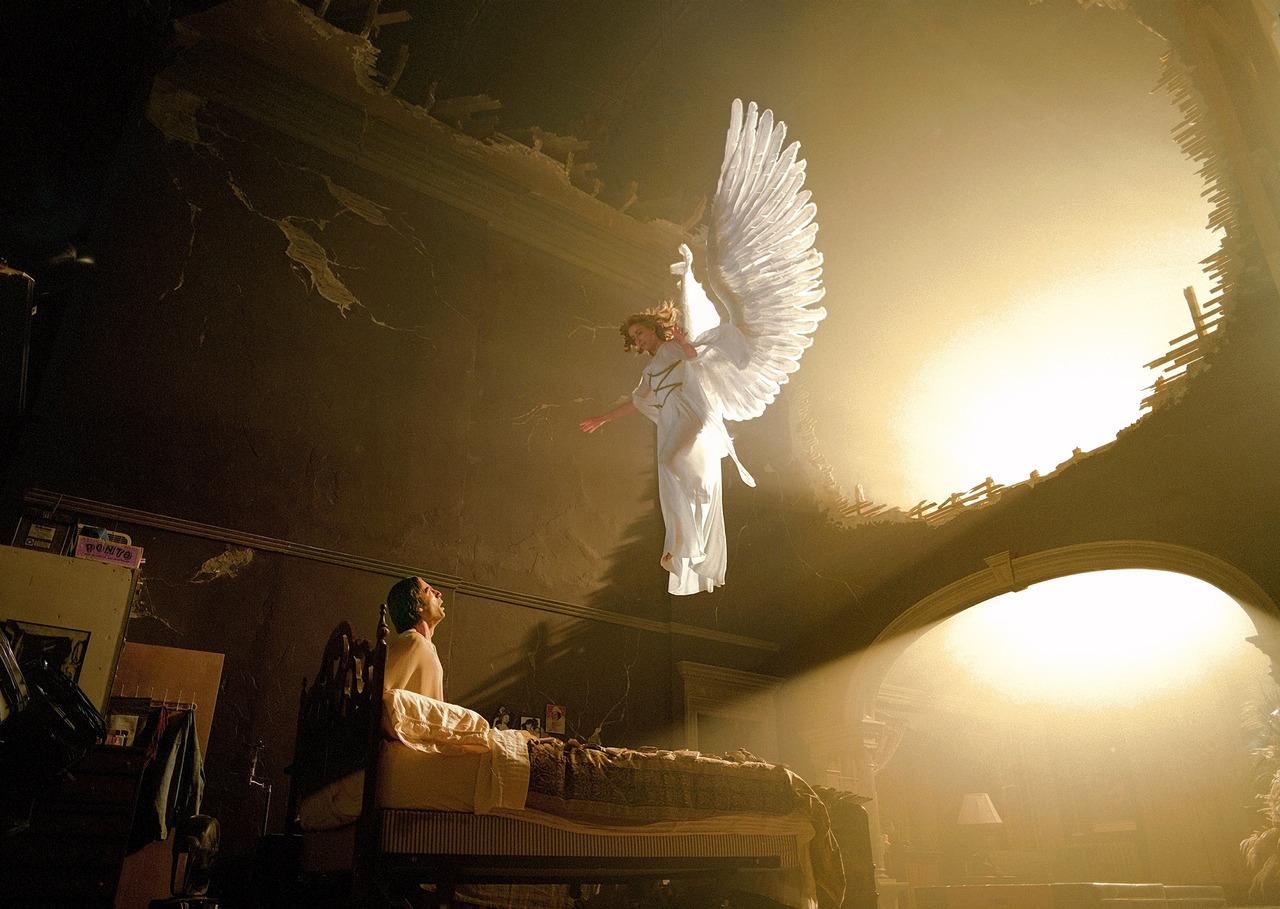
angel1

Borrowed this image from http://rapgenius.com/Angel-us-god-over-everything-lyrics#note-2268286

Posted in Dream, Lyrics, Music, Poem, Reprint, Sex, Speculative Fantasy | Tagged , , , | 4 Comments

When That Gregorian Calendar Rolls Over

This time of year the anesthetic wears off
and the nerves around your heart
fray into syncopated buzzing lights that
remind you of how the way you want to be
differs from the way you are.

The Accountant opens the book to your page
and runs a bony finger through those transactions
that spank your bottom line.
Somehow, you let “your own worst enemy”
make up the rules of engagement.

It’s like trying to answer the question:
“Have you stopped hating yourself?”
Do you deny?
Do you accept?
Do you explain?

No matter what, you are defensive,
bent nerves tic in your face,
honest answers feel like excuses, and satisfaction
exists in only the warmest fantasy,
unless you are mindless, atrocious, or dead.

It takes awhile, but you choose to be alive,
to be kind, and to embrace
both the living and the kindness.
You find gratitude
just as it finds you.


laughing ladies

Posted in Poem, Slice of Life | Tagged , , , , , , | Leave a comment